
I worked on a collection notebook for an Art of Asia class, and wanted to share it!
According to Sōetsu Yanagi’s book, The Beauty of Everyday Objects, the Mingei movement began in Japan during the 1920s primarily through the writings of Sōetsu Yanagi and elevated through potters such as Shoji Hamada and Kanjiro Kawai. Created during a time of industrialization and increasing mass production, the movement attempted to revalue traditional, handmade objects created by anonymous artisans. Instead of focusing on individual artistic genius, Mingei emphasized collective craftsmanship and regional traditions, everyday items were not seen as mere tools, but as expressions of cultural identity shaped through generations of skill and lived experience.
At the core of Mingei philosophy is the idea that beauty is found in utility and simplicity. This perspective fits closely with the Japanese aesthetic of Wabi-sabi, which values asymmetry. Mingei objects are meant to be used, handled, and integrated into daily life, gaining character through wear rather than remaining untouched. By elevating the “ordinary,” the movement challenges distinctions between fine art and craft, suggesting that meaningful beauty exists not in rarity or luxury, but in the quiet, functional objects that sustain everyday human life.
–
Yanagi, Soetsu. The Beauty of Everyday Things. Penguin Books, 2019.
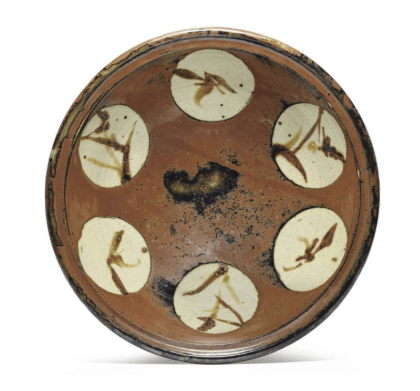
Hamada Shoji, A Large Stoneware Bowl, Glazed Ceramic, Japan
This bowl was likely used in everyday domestic settings for serving rice or shared dishes at the family table. Its weight, and durable glaze make it suited for repeated handling, washing, and daily use rather than ceremonial display.
Created by Shoji Hamada, this stoneware bowl reflects the ideals of the Mingei movement, placing importance to handmade functional objects as central to cultural life. The slip decoration and irregular forms highlight the visibility of the maker’s hand and the acceptance of natural variation in clay and fire.
Within Mingei philosophy, the bowl’s beauty is inseparable from its use. Its surface changes through handling, which makes it a living object shaped by time and human contact. It reflects the belief that ordinary objects, when honestly made and used, carry profound aesthetic and cultural value.
“Hamada Shoji (1894-1978).” A Large Stoneware Bowl , HAMADA SHOJI (1894-1978) | Christie’s, 20 Mar. 2013, www.christies.com/lot/lot-a-large-stoneware-bowl-hamada-shoji-5658696/?from=salesummery&intObjectID=5658696&sid=5da04d4d-d8d1-4d64-ae5b-240ee1517dad.
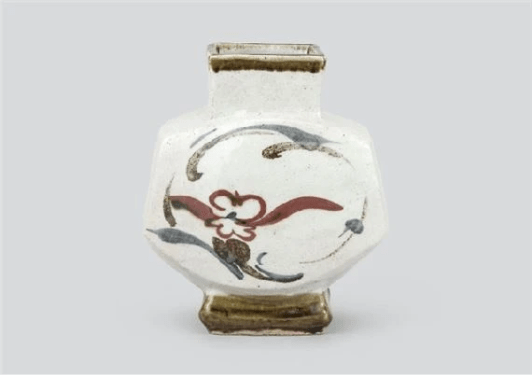
Kanjiro Kawai, Flask with design of grass and flower on white ground, Glazed Ceramic, Japan.
This jar likely functioned as a household storage vessel for food, water, or dry goods. Its opening and stable base made it practical for repeated access and everyday domestic organizations.
Made by Kanjiro Kawai, the jar reflects an intentional rejection of industrial uniformity and in favor of handmade imperfection. Its curves and subtle glaze variations demonstrate careful control of kiln conditions. Its use of color is quiet and not meant to be the center of attention, but a demonstration of family identity meant to last generations.
As part of the Mingei movement, the jar embodies the idea that beauty should exist in ordinary life. Its quiet form transforms a utilitarian container into an object of quiet presence.
“Mutualart – Auctions, Exhibitions & Analysis for 900K+ Artists.” Kanjiro Kawai | Flask with Design of Grass and Flower of White Ground, 14 Sept. 2023, www.mutualart.com/Artwork/Flask-with-grass-and-flower-design/E2A5681332A9CB90.
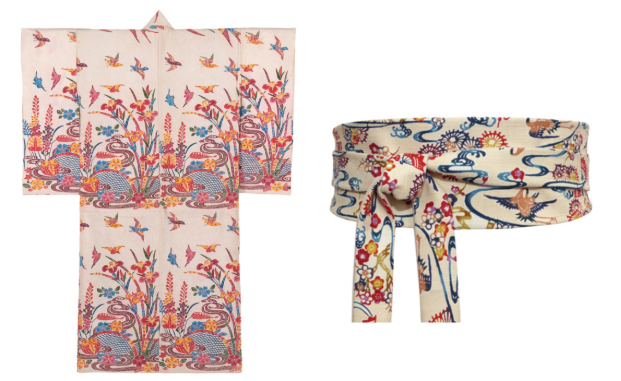
Bingata – Okinawan Textile Art. 19th Century, Japan
This textile was used for garments, particularly kimonos worn during ceremonies and formal occasions. Its lightweight structure and fibers made it suitable for Okinawa’s warm, humid climate.
Produced through stencil dyeing and hand-applied pigments, bingata reflects centuries of craft knowledge in Okinawa. The bold colors and natural motifs are the result of layered dye processes using locally sourced materials and collaborative workshop traditions.
Although it goes against the appreciation of simplicity in the movement, it aligns with the Mingei movement in its grounding in communal labor and everyday use. It represents how functional textiles can also carry cultural identity, memory, and regional expression.
“Bingata – Okinawa Textile Art.” Polina Couture, 21 Dec. 2024, polinacouture.com/en/bingata-textile-art-okinawa/?srsltid=AfmBOoots1kw77795ih50GD_69H4-keCh58guy60VVJ7FY8HDwZOLgHh.
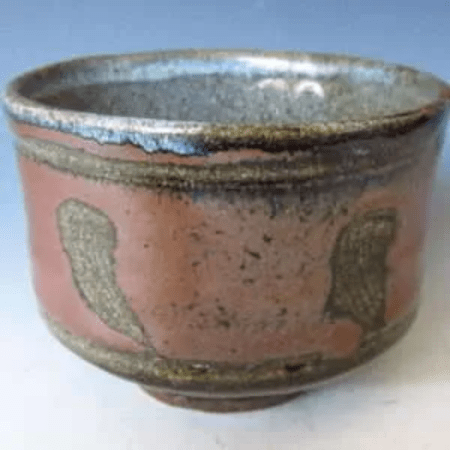
Hamada Shoji, Mashiko Ware Tea Bowl, Glazed Ceramic, Pre-1960, Japan
This bowl was likely created to be used in the preparation and drinking of matcha tea, where form and tactile engagement are essential. Its shape fits comfortably in the hand, retaining heat while allowing mindful interaction during tea practice.
This piece, created by Shoji Hamada, is shaped from local clay and fired in wood kilns that produce surface effects. Ash deposits and glaze variations are embraced as part of the firing process rather than controlled away.
Within the Mingei movement, the bowl represents the belief that repeated use enhances beauty. Its surface evolves over time, recording the relationship between object, fire, and human touch.
“Mashiko Ware Tea Bowl by Hamada Shoji: 1191344.” Zentner Collection, 4 May 2023, zentnercollection.com/product/mashiko-ware-tea-bowl-by-hamada-shoji/.
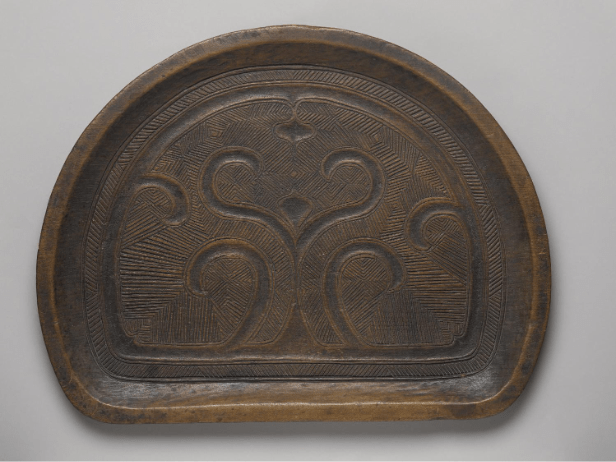
Ainu. Carved Tray, late 19th–early 20th century. Wood, Japan.
This tray was used in daily household life for serving food and carrying offerings. Its raised edges provide stability, making it practical for transport and shared meals.
Originating from the Ainu people of northern Japan, the tray is carved with motifs referencing nature and spiritual protection. These designs reflect a worldview in which everyday objects hold relational meaning between humans, animals, and the natural world.
While not originally part of Mingei, it was later valued within the Mingei movement for its authenticity and communal origins. It demonstrates how function and cultural symbolism can exist within a single utilitarian object.
“Brooklyn Museum.” Carved Tray, www.brooklynmuseum.org/objects/6549. Accessed 22 Apr. 2026.
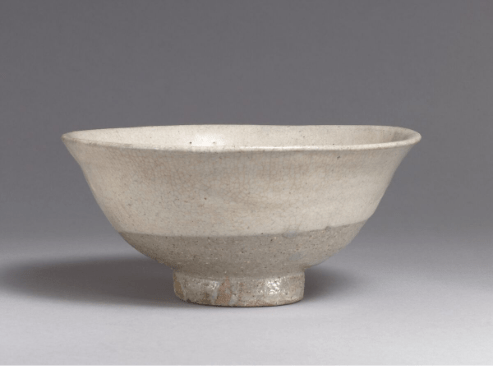
Bowl, Buncheong ware with white slip, First half of the 16th Century, Korea.
This bowl was likely used for everyday eating and serving within households during Korea’s Joseon Dynasty. Its durable ceramic body and open form made it suitable for repeated handling in domestic life.
Buncheong ware originally developed in the 15th–16th centuries as a more informal alternative to court porcelain. Artisans applied white slip over dark clay and decorated surfaces with stamping or incised designs. This process allowed for rapid production and expressive variation, often resulting in spontaneous, individualized surfaces that contrast with elite ceramics.
Within Mingei interpretation, and later through the writings of Sōetsu Yanagi, buncheong ware became a key example of beauty arising from ordinary labor. Its aesthetic emerges directly from use-oriented production rather than elite artistic control.
“Bowl – Korea – Joseon Dynasty (1392–1910) – the Metropolitan Museum of Art.” Bowl – Korea – Joseon Dynasty, www.metmuseum.org/art/collection/search/39571. Accessed 22 Apr. 2026.
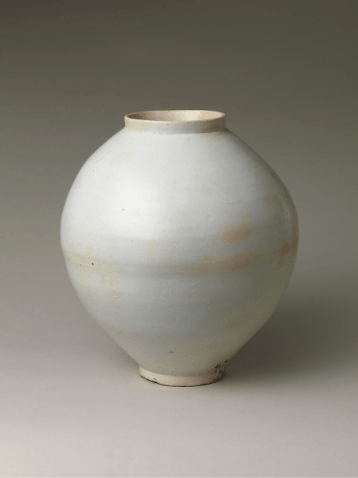
Moon Jar, Porcelain, Joseon Dynasty, Korea.
This vessel was created for storing grains, liquids, or fermented foods in domestic Korean households. Its large capacity and wide opening made it essential for everyday food preservation and storage practices.
The moon jar is formed by joining two separately thrown hemispherical sections, a technical necessity for firing large porcelain vessels. Its milky glaze and visible seam reflect both structural challenge and acceptance of imperfection. Produced during the late Joseon period, it reflects a shift toward simplified, domestic-focused ceramic production.
Within Wabi-sabi and Mingei interpretation, the moon jar is valued for its humility. Its imperfect symmetry transforms a functional storage vessel into an object that reflects human limitation, and quiet beauty.
“Moon Jar – Korea – Joseon Dynasty (1392–1910) – the Metropolitan Museum of Art.” The Met Museum, www.metmuseum.org/art/collection/search/45432. Accessed 22 Apr. 2026.
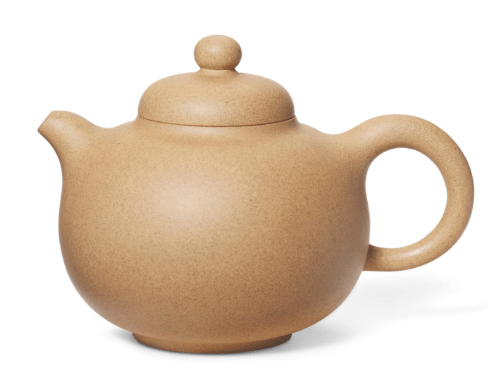
Wu Yaping, A Yixing Teapot and Cover ‘Flat Lantern,’ Clay, 20th Century, Korea.
This teapot was used for brewing and serving tea, often personalized through repeated use. The clay gradually absorbs tea oils, subtly altering flavor and appearance over time.
Originally produced in Jiangsu, China, Yixing teapots are hand-formed without molds, requiring precise control of thickness and proportion. The clay is specially valued for its mineral composition, which enhances heat retention and develops patina through long-term use. Each teapot becomes unique through handling and accumulated history.
Even though it originates outside of Japan, it aligns with Mingei principles through its emphasis on utility and material honesty. The object embodies a living relationship between function and time.
“A Yixing Teapot and Cover, ‘Flat Lantern.’” Christies.Com, 26 Mar. 2019, onlineonly.christies.com/s/contemporary-clay-yixing-pottery-irving-collection/yixing-teapot-cover-flat-lantern-11/67023.
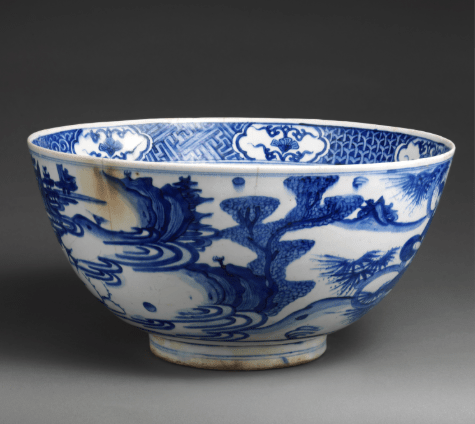
Imitation Blue-and White Bowl, Stone paste; painted in blue under transparent glaze, 17th Century, Iran.
This bowl was used in everyday domestic meals for serving rice, soup, and shared dishes. Its durable ceramic construction allowed for frequent handling and long-term use in household settings.
While this specific piece was made in Iran, it is meant to replicate pieces originally produced in Chinese folk kilns, these bowls were made in large quantities for local markets instead of elite consumption. The painted designs vary in precision, reflecting workshop conditions where multiple artisans contributed to production. Unlike imperial wares, these objects prioritize accessibility and practicality over refinement.
Within Mingei interpretation, such objects show how anonymous labor and repetition can produce visual richness. Their aesthetic emerges from everyday necessity rather than individual artistic intention.
“Imitation Blue-and-White Bowl – the Metropolitan Museum of Art.” The Met Museum, www.metmuseum.org/art/collection/search/451907. Accessed 22 Apr. 2026.
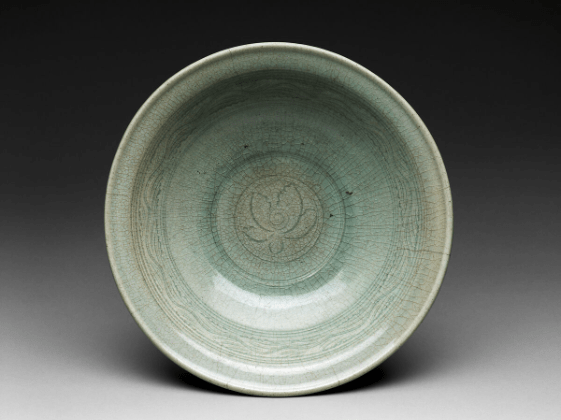
Bowl with Lotus, Stoneware with incised decoration under celadon glaze (Si Satchanalai ware), 15th-16th Century, Thailand.
This bowl was used for serving food in everyday domestic contexts. Its smooth interior and balanced form make it practical for repeated use in household dining.
Produced through controlled kiln firing, Thai celadon achieves its soft green glaze through reduction processes that alter iron content in the clay. Slight variations in tone and texture reflect subtle differences in heat and atmosphere during firing, making each piece unique.
Within Mingei values, the bowl reflects the integration of function and quiet beauty. Its restrained surface emphasizes material honesty and the dignity of everyday use.
“Bowl with Lotus | Thailand | The Metropolitan Museum of Art.” The Met Museum, www.metmuseum.org/art/collection/search/37586. Accessed 22 Apr. 2026.
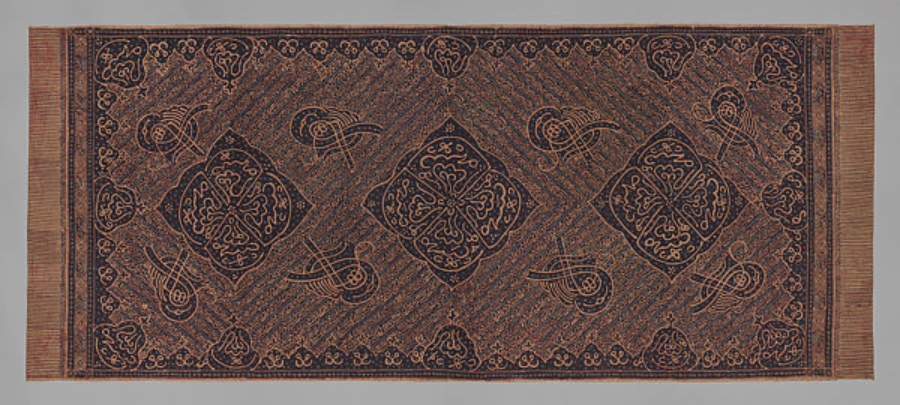
Batik with Talismanic Calligraphic Motifs, Cotton; Tulis batik, 19th–early 20th century, Indonesia.
This textile was used for clothing, ceremonial dress, and social identification across Indonesian communities. Its lightweight cotton structure allows for comfortable daily wear in warmer or more humid climates.
Batik is produced through a wax-resist dyeing process in which wax is applied in stages to create complex layered patterns. Each motif carries symbolic meaning tied to region, status, or ritual context. Production is often organized through workshop traditions that preserve designs over time.
Within Mingei interpretation, batik demonstrates how functional textiles can carry layered cultural meaning. Its aesthetic emerges from disciplined handwork embedded in daily life.
“Batik with Talismanic Calligraphic Motifs | The Metropolitan Museum of Art.” The Met Museum, www.metmuseum.org/art/collection/search/861104. Accessed 22 Apr. 2026.
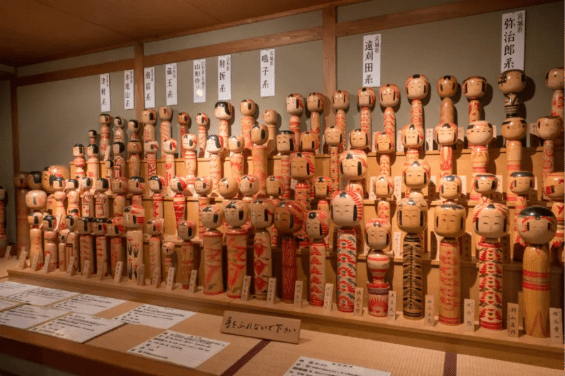
Japanese Kokeshi Dolls, Wood, Tohoku Region, Japan.
These wooden dolls were originally made as children’s toys and souvenirs sold at resorts in northern Japan. Their simple cylindrical bodies and rounded heads made them easy to produce and durable for handling, while also serving as keepsakes for travelers.
Kokeshi dolls emerged during the Edo period among rural woodworkers who adapted techniques used for household objects. Typically painted with minimal floral or geometric motifs, their designs vary by region, reflecting localized craft traditions and workshop styles. The anonymity of their makers and their production within small communities situate them within the broader values of the Mingei movement.
Although modest in scale and purpose, kokeshi dolls embody the transformation of everyday craft into cultural expression. Their simplicity emphasizes form, material, and repetition, demonstrating how objects made for ordinary use can carry regional identity and enduring aesthetic value.
“Zao Kokeshi Museum.” VISIT MIYAGI, visitmiyagi.com/contents/zao-kokeshi-museum/. Accessed 21 Apr. 2026.
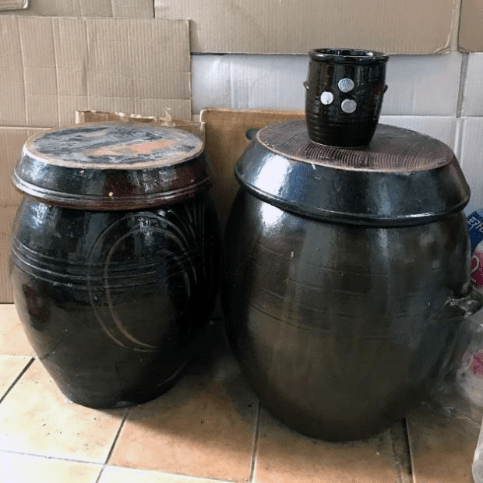
Onggi Storage Jar, Clay, Originally Joseon Period, Korea
Onggi jars were used for fermenting and storing foods such as kimchi, soy sauce, and soybean paste, forming an essential part of traditional Korean food preservation practices. Their breathable clay structure allows gases to escape during fermentation while protecting contents from spoilage.
These jars are made from coarse clay and fired at low temperatures, resulting in a durable surface. Their forms are shaped for outdoor storage, often partially buried or kept in courtyard spaces. The making of onggi is rooted in generational knowledge, with artisans specializing in balancing material composition and firing conditions to achieve the necessary durability.
Within the context of the Mingei movement, onggi jars exemplify the inseparability of function and craft. Their quiet forms and essential role in daily life highlight how utilitarian objects sustain both cultural practices and aesthetic traditions.
“Onggi Pottery from Korea to D.C. | Folklife Magazine.” Folklife Magazine, folklife.si.edu/magazine/onggi-pottery-korea-to-dc-necessity-to-health-trend. Accessed 22 Apr. 2026.
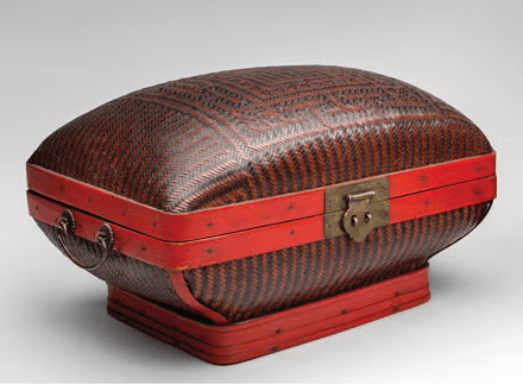
Woven Basket, Bamboo, Originally Neolithic Period (7000-1700 BCE), China
This basket was used for carrying agricultural goods, storing food, or transporting items within rural households. Its lightweight yet strong structure makes it adaptable for a wide range of everyday tasks.
Handwoven from split bamboo, the basket reflects a deep understanding of natural materials and structural design. The weaving patterns are both functional and aesthetic, distributing weight evenly while creating rhythmic visual textures. Production typically occurs within family or village contexts, with techniques passed down through generations.
Aligned with the ideals of the Mingei movement, the basket demonstrates how necessity drives innovation in craft. Its beauty emerges from efficiency, repetition, and material honesty, illustrating how everyday labor can produce objects of quiet sophistication.
“Portable Craft: Chinese Woven Baskets and Containers.” Portable Craft: Chinese Woven Baskets and Containers | SFO Museum, www.sfomuseum.org/exhibitions/portable-craft-chinese-baskets. Accessed 21 Apr. 2026.
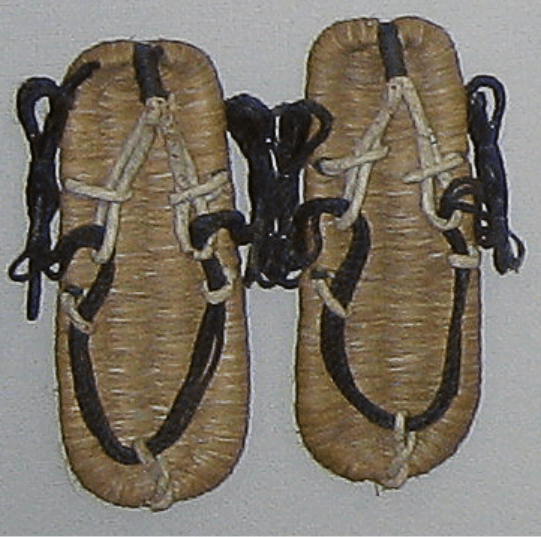
Waraji Sandals, Originally Heian Period (794-1185 CE), Japan.
Waraji sandals were worn by farmers, travelers, and laborers as everyday footwear in premodern Japan. Made from rice straw, they were inexpensive and easily replaced, making them practical for long-distance walking and agricultural work.
The sandals are constructed through hand-braiding techniques that bind straw fibers into a flexible yet sturdy sole. Their design allows for breathability and adaptability to different foot shapes, while their materials connect directly to agricultural cycles. Production was often done within households, reflecting a self-sufficient approach to material culture.
Within the Mingei movement, waraji embody the principle that even the most humble objects can possess aesthetic and cultural significance. Their ephemeral nature underscores values of impermanence and sustainability, closely aligned with Wabi-sabi, where beauty is found in transience and use.
“Waraji.” Wikipedia, Wikimedia Foundation, 17 Dec. 2025, en.wikipedia.org/wiki/Waraji#:~:text=Traditionally%2C%20waraji%20were%20donated%20to,for%20tireless%20endurance%20in%20walking.


Leave a Reply